Podcast and video clipping
How to run a podcast clipping campaign
Learn how podcast clipping campaigns work: source permissions, creator participation, view-based rewards, budget caps, evidence, and payout reconciliation.
By Foleo
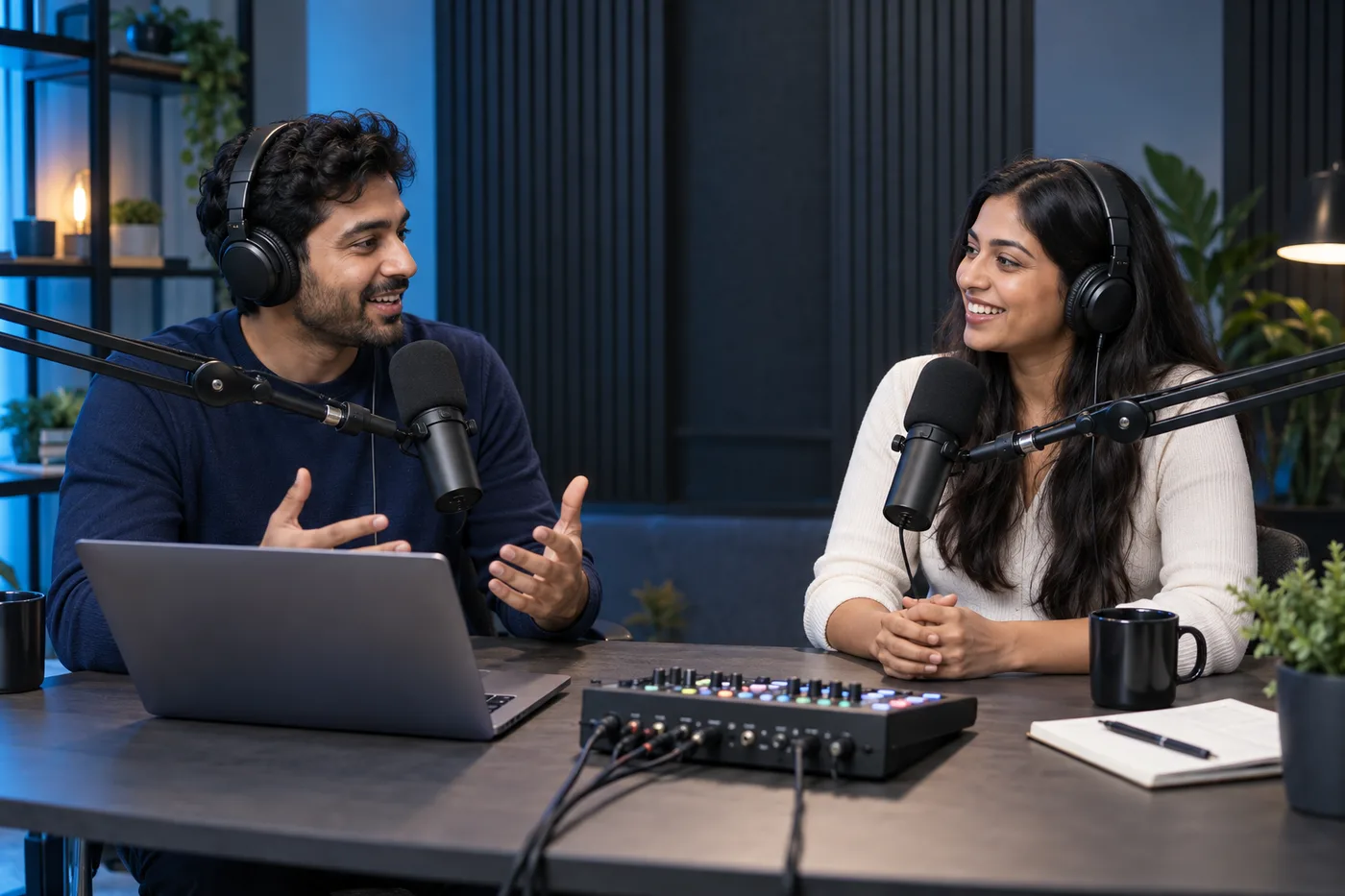
Clipping is both editing and distribution. Decide who can use the footage, where clips can be posted, and how eligible views become payable before anyone starts.
What is a clipping campaign?
A clipping campaign gives creators permission to turn a longer podcast, interview, stream, or other approved video into shorter social posts. Instead of publishing every excerpt yourself, you coordinate multiple creators around a shared source, rules, and reward model.
It differs from simply paying an editor for exported files: the campaign can include distribution through participating creators' accounts. It also differs from commissioning entirely new footage. On Foleo, this source-based performance workflow is called a Clip Brief; original-content campaigns use Open Briefs.
Prepare footage people can use responsibly
Only supply footage you own or are authorized to license for the proposed use. Check the permissions for guests, music, logos, and embedded third-party material. Making a source publicly viewable does not itself grant permission to edit, repost, or advertise with it.
Provide useful timestamps, context around the moment, and an approved destination link. Explain what must not be edited out or presented misleadingly. Set allowed platforms, caption requirements, and paid-promotion disclosures. A logo or website in the frame does not replace disclosure of a paid relationship.
- Approved source and relevant timestamps
- Editing rules and forbidden claims
- Allowed platforms and disclosure text
- Post deadline, metric window, and evidence requirements
A worked view-based payout example
Illustrative example, not a Foleo price quote: a campaign offers BDT 200 per 1,000 verified eligible views. A post with 18,000 eligible views starts at BDT 3,600 gross. If the published per-post cap is BDT 3,000, the post is capped at BDT 3,000 before the remaining limits are considered.
If that creator has only BDT 2,500 left under their campaign cap, the candidate amount falls to BDT 2,500. If only BDT 2,000 remains available in the campaign budget, the amount cannot exceed BDT 2,000 under a remaining-budget cap. Allocation and final eligibility must follow the accepted terms and reconciliation order, not an improvised promise after posting.
Publish the rate, per-post cap, per-creator cap, campaign budget, and metric lock window together. Explain what happens when the budget is exhausted. View-based compensation can result in little or no payout; participation should never be described as guaranteed earnings.
Set eligibility and accept terms before publishing
Decide whether creators apply first or join through open participation subject to the campaign's eligibility rules. Make the source access, requirements, reward terms, and deadlines clear before asking for creative work. Creators should accept a versioned set of terms before participation.
A campaign owner should not lower an accepted rate retroactively. A new version is a new agreement, not permission to rewrite what an existing participant accepted. Confirm whether multiple posts are allowed and how duplicate or reuploaded content is handled.
Reconcile evidence, not screenshots alone
A public view counter is not automatically the number of eligible payable views. Tie every submission to a post URL, platform, creator, capture time, and the campaign's metric window. Review duplicates, missing disclosures, unusual spikes, and changes that may affect eligibility.
Foleo supports metric evidence and admin reconciliation. Connected-platform data depends on the platform, authorized account, and integration availability; do not assume every pasted URL has real-time API verification. A discrepancy is a reason for review, not proof of fraud. Serious enforcement and payout denial require human review and an appeal path.
Measure more than the view total
Keep distribution reach separate from business outcomes. Use an agreed campaign destination and tracking links where appropriate, then compare eligible views, completed posts, campaign spend, and attributable actions. Do not label every website visit or sale as caused by clipping.
Start with a bounded campaign so you can learn which moments and creator audiences work. Keep source quality, review speed, disclosure, and payout clarity in the same operating plan. The strongest next campaign is informed by actual results, not a promise of virality.
Clipping campaign launch checklist
Source: [authorized footage and timestamps].
Context to preserve: [facts and required framing].
Platforms and disclosures: [rules for each platform].
Eligibility and participation: [application / open, thresholds].
Reward: [currency and rate per 1,000 eligible views].
Limits: [per-post, per-creator, total campaign budget].
Timing: [posting deadline, metric lock window].
Evidence and review: [required records, corrections, appeals].
Budget exhaustion: [allocation and stop rules].